Why Parlor Kids exists
Reading comprehension: reading is understanding.
A child can read every word on a page and still miss what happened. Reading comprehension is understanding what you read: who did what, why, and what it means. Parlor Kids was built for that one thing.
What is reading comprehension?
A child can read every word of a page aloud and still not know what happened on it. Decoding (turning letters into words) is how reading starts. Comprehension is what reading is for: building a picture of the story in your head and keeping it straight as you go.
A child who understands a chapter can:
- Remember what happened, in order, and who was there.
- Notice when something doesn’t fit, and go back to the page to check.
- Say why a character did something, not only what they did.
- Work out a new word from the sentence around it.
- Tell it in their own words, so someone who wasn’t there would get it too.
What your child practises
Five habits of a reader who understands.
Every session with Bert works on them, in about 5 to 10 minutes. Several are habits reading researchers recommend teaching, such as checking your understanding while you read and summarising what you read (National Reading Panel, 2000).
1Predict
A guess before every chapter.
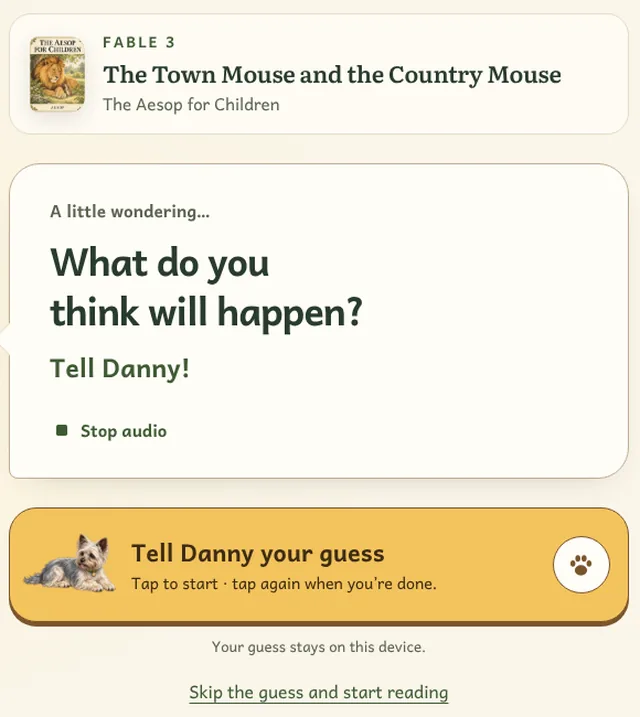
Bert shows the chapter’s title and asks what will happen. Your child tells Danny, or just starts reading. A guess gives them a reason to read on, and something to check at the end.
2Know the words
The real book, with help for hard words.
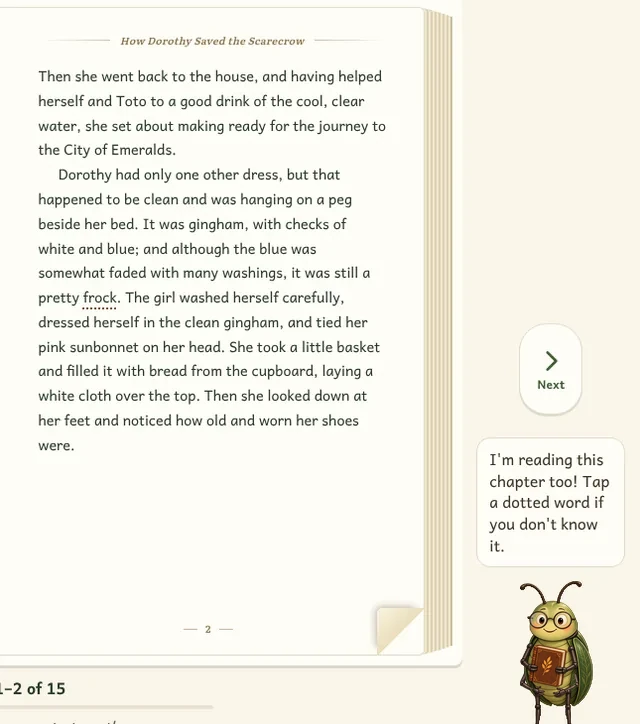
Your child reads a chapter of a classic book, laid out as a book. Words that may be new are underlined with dots: a tap explains them. Any page can be read aloud, and children 5 to 7 hear the whole story.
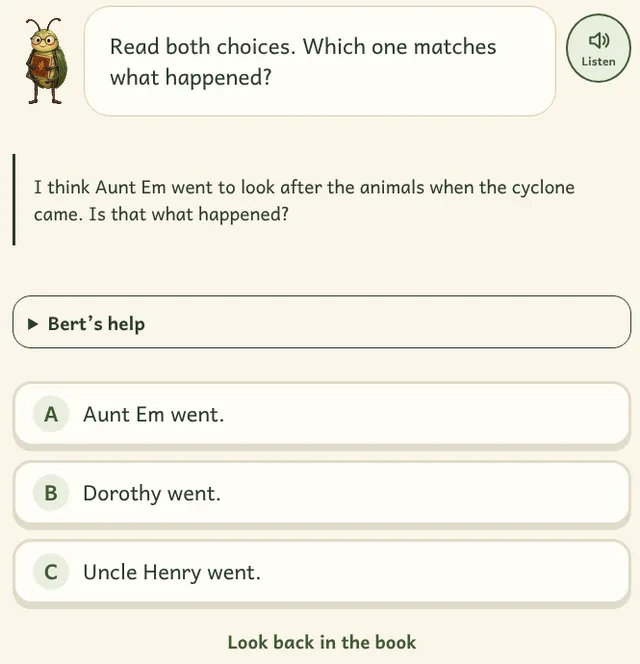
3Notice what doesn’t fit
Bert gets it a little wrong.
After the chapter, Bert says what he thinks happened, and part of it is mixed up. Your child has to hold the story in mind to catch it. Noticing when something doesn’t match is how good readers check their own understanding.
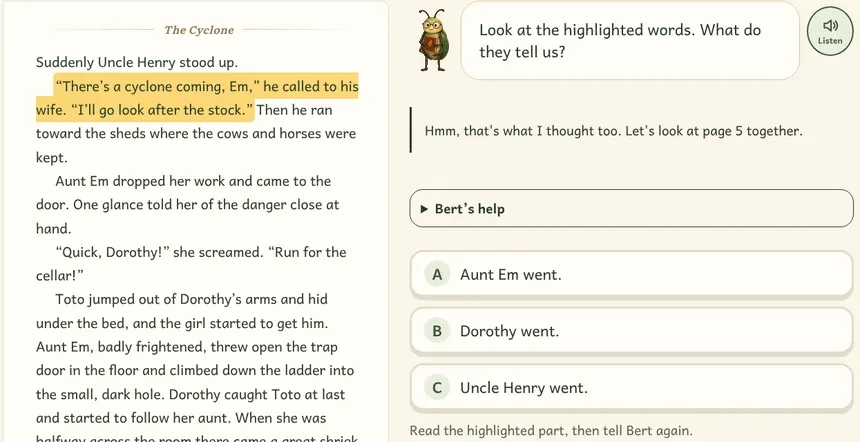
4Go back to the book
The answer is always on the page.
When your child isn’t sure, Bert doesn’t give the answer. He opens the book at the right page, then lights up the sentence. Children learn where answers come from, and how to find them on their own.
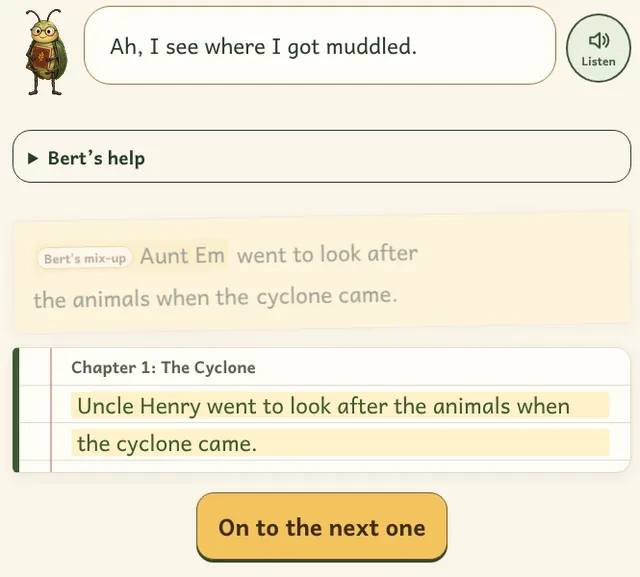
5Explain it
Your child puts Bert right.
Younger children pick the right version; children 10 to 12 explain it in their own words, typed or said. Bert has his “aha”, his mix-up fades away, and he writes the right version in his notebook: a short, correct retelling of every chapter.
Why it matters
Why reading comprehension matters, for school and for life.
Around third or fourth grade, school changes from learning to read to reading to learn. Science, history, word problems in maths and every set of instructions arrive as text. A child who reads the words but misses the meaning falls a little further behind in every subject.
It doesn’t stop at school. Adults use the same skill to follow a contract, a doctor’s instructions or a news story, and to notice when something doesn’t add up. Understanding what you read is how you keep learning on your own.
40%
of American fourth graders read below the basic level in 2024, the largest share since 2002. Among eighth graders it was about a third, the largest on record.
At every age
Understanding starts before reading alone.
- 5 to 7
Read with Bert
A grown-up or Bert reads aloud. Your child listens, then picks which of two versions is right. - 7 to 10
Read to Bert
Your child reads, can hear any page, and picks the right version from three. - 10 to 12
Explain to Bert
Longer chapter books. Your child explains what really happened and why, typed or said.
For kids
What does it mean to understand a story?
Reading isn’t only saying the words. It’s seeing the story in your head: who’s there, what happens, and why.
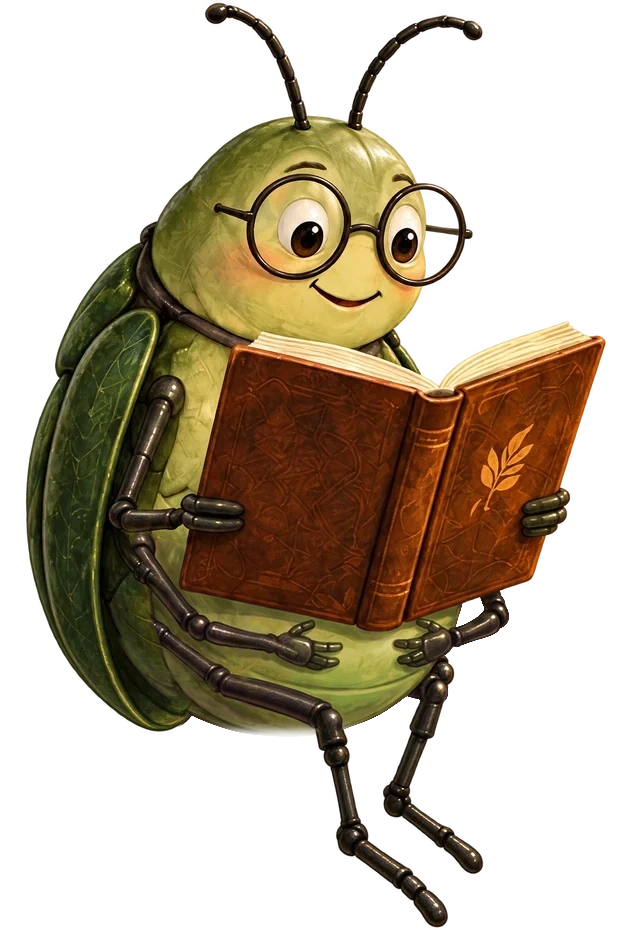
Bert the Book Beetle loves stories, but he reads too fast and gets things muddled. After you read a chapter, he tells you what he thinks happened. Something in it is wrong. Can you find it, and tell him what really happened?
If you’re not sure, look back in the book. The answer is always in there.
For parents
What you can do at home
- Ask “what do you think will happen?” before a chapter, and “was it like your guess?” after.
- Ask “why?” more than “what?”: why did she go back, why was he afraid.
- Get it a little wrong on purpose, like Bert, and let your child correct you.
- When they’re not sure, find the page together instead of telling them.
What we can and can’t promise
Parlor Kids is new, and we haven’t measured its results yet. What we can promise is that every minute is spent on understanding the story, not on points, streaks or ads. Research on “teachable agents” found that children try harder when they teach a character than when they learn for themselves; that’s why your child is the one who knows, and Bert is the one who learns.
Sources: National Assessment Governing Board, 2024 NAEP reading results (January 2025); National Reading Panel, Teaching Children to Read (2000), on teaching comprehension; Chase, Chin, Oppezzo and Schwartz, “Teachable Agents and the Protégé Effect” (2009). The app screens above are from Parlor Kids with a test account.
Help your child understand what they read.
Parlor Kids is open to a small group of families while we test it.